

How BIM platforms can help improve ITO management
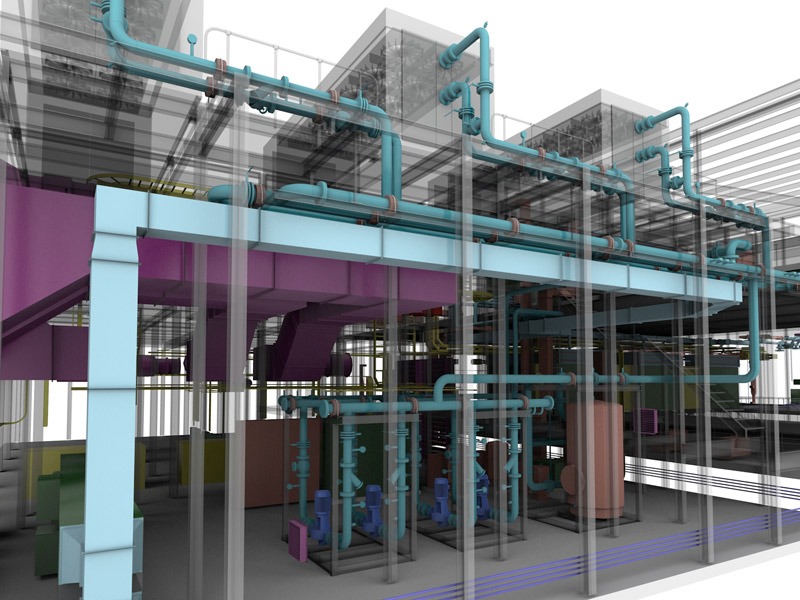
- 29/05/2019
- News
According to the Technical Inspection Manual of Works, published by the Technological Development Corporation in 2011, the Technical Inspection of Works (ITO) is, at present, an advisory service that satisfies the need to incorporate, in the work of construction, an external agent with technical merits and extensive knowledge in project management and Administration of construction contracts, provides support in the management and supervision of construction projects. Likewise, the ITO has as an essential role to advise the client in his technical relationship with the other agents of the process in the various stages of the project. From these perspectives, the ITO fulfills important functions during the execution of a project, both technical and administrative, which in recent years have been advancing towards a role closer to Project Management and Coordination.
For the optimal development of the tasks of the Technical Inspection of Works, for some time now, different methodologies, systems or technologies have been developed that have allowed to support the activity and have strongly contributed to improving the management of the Technical Inspector of Works. Within this, one of the main systems is BIM (Building Information Modeling), being, according to the definition of the Education Group from BIM Forum Chile, an acronym used for two concepts: BIM (Building Information Model) is the parametric digital representation of the construction product (slabs, walls, pillars, equipment, doors, windows, etc.) that includes its geometry and information and BIM (Building Information Modeling) is a methodology/process to develop and use BIM models to support design decisions, Construction and operation throughout the life cycle of a project, which implies an integration of information provided and used by different project actors. That is, the BIM methodology has evolved as new technologies are developed that support it, transforming from a design tool into a project management and administration tool throughout its life cycle.
Considering the above, the use of BIM methodologies during the construction stage will provide multiple tools for the different functions of the ITO, such as verifying discoordination between specialties, verifying geometry and identifying design errors and lack of antecedents in advance, allows to facilitate and improve the controls the progress of the construction in relation to the base programming, Control costs according to progress, simultaneously control the different specialties, generate reports of deviations, visualize areas of greater complexity, detect interferences, substantially improve communication between the different actors of the project, among others. All these aspects that the BIM methodology allows to handle more easily will better enable the works to comply with the requirements defined by the client or owner of the project, which are normally to comply with the quality standards, within the specified deadlines, within the defined budget and with the adequate controls of the risks towards people and the environment. which is a fundamental role of the ITO.
Fountain:
By Mauricio Heyermann G., Project Management Group Coordinator – BIM Forum Chile. http://www.bimforum.cl/2016/05/11/como-las-plataformas-bim-pueden-ayudar-a-mejorar-la-gestion-de-la-ito/
El Mercurio / April 26, 2016



More Articles
View All




 EN
EN  ES
ES